
Car accident trauma
San Antonio stands as a vibrant metropolis where history and modernity converge. However, with its growing population and busy highways like I‑10, I‑35, and Loop 1604, our city also faces the unfortunate reality of frequent car accidents. As San Antonio continues to expand, so does the need for adequate support for accident survivors, as car accident trauma is real.
Broken bones and bruises may heal, but the psychological impact of a car crash often stays around for much longer. For many survivors in San Antonio, the journey doesn’t end when they leave the hospital. It’s only the start of grappling with the following problem — invisible, psychological wounds that profoundly affect their daily lives.
Do I need trauma therapy?
Not everyone needs trauma therapy following a car accident; however, some people do. Being both aware and attentive to your symptoms can help you to navigate this decision. Consider the following signs of car accident trauma:
Signs of accident-related trauma
If you’ve ever been involved in a car accident, there’s a good chance you know what these wounds feel like. So we’re on the same page, these are some of the signs that indicate accident-related trauma:
- Persistent anxiety when in or around vehicles
- Vivid flashbacks of the accident
- Avoidance of driving on specific roads
- Sleep disturbances and nightmares
- Heightened startle response to traffic sounds
These symptoms aren’t just inconvenient—they can be debilitating.
They may prevent you from commuting to work, getting in your car, enjoying a drive to the scenic River Walk, or even participating fully in family life. Fortunately, like physical injuries, these can heal, too, through trauma therapy.
Trauma therapy for accident-related stress
Trauma therapy is a specialized form of mental health treatment designed to help individuals process and overcome traumatic experiences. For car accident survivors in San Antonio, it’s the most effective way to reclaim your life and find peace behind the wheel again. What’s better, is that you can participate in trauma therapy from the safety and comfort of your home.
EMDR: The Practical approach to trauma therapy
Eye Movement Desensitization and Reprocessing (EMDR)
This innovative and effective therapy uses bilateral stimulation (often eye movements) while you recall the traumatic event. It’s shown remarkable effectiveness in reducing the emotional charge of accident memories. Several research papers have suggested that EMDR is faster and generally more effective than the long-standing Cognitive Behavioral Therapy, which addresses your thoughts about a situation.
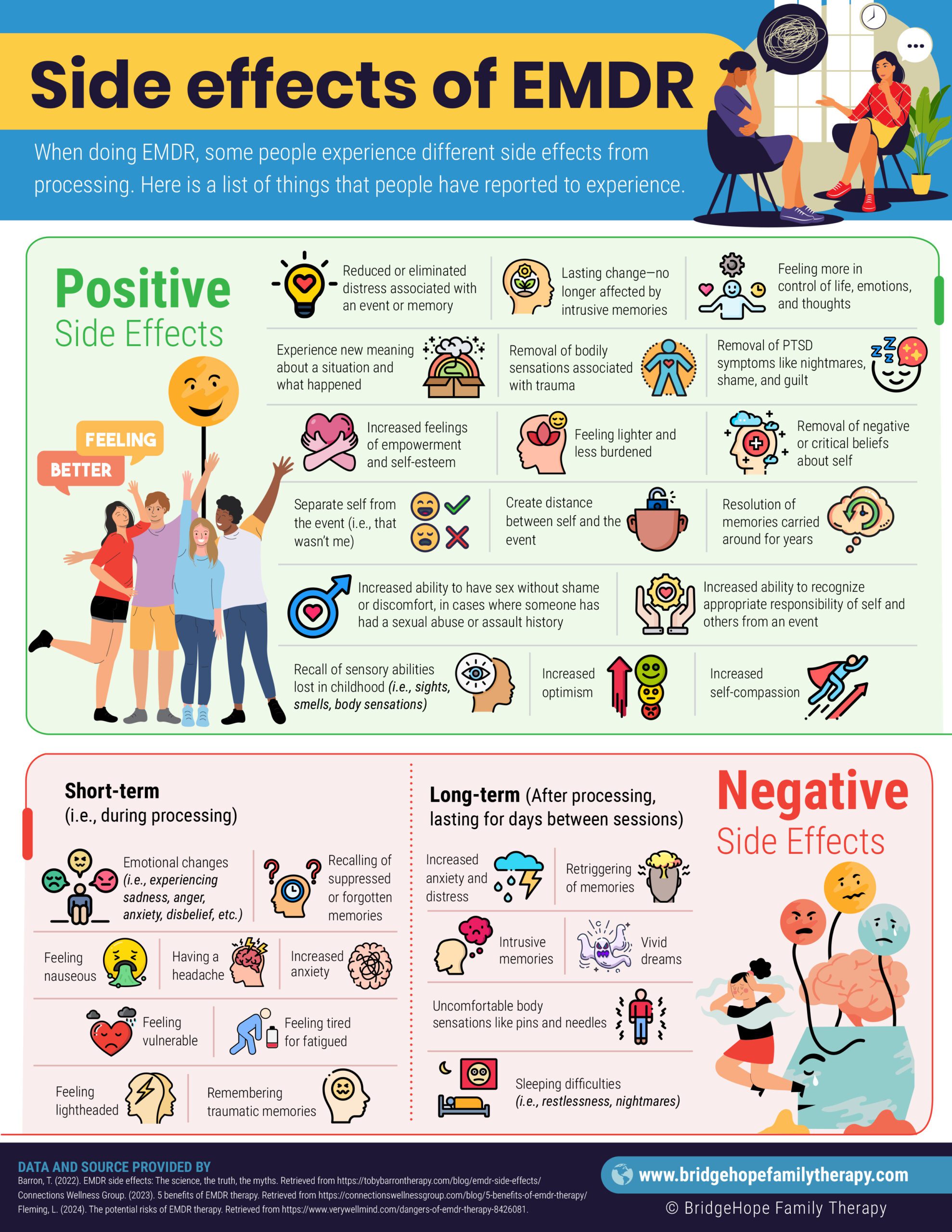
EMDR yields both positive and negative side effects. Positives include things like elimination of the effects of the memory or of blaming yourself, while negatives may include suppressed memories or irritation. To review an infographic of the full list, click here.
What to Expect in Trauma Therapy
Trauma therapy is a journey unique to each individual. You’re not going to get the exact experience of another person.
However, here’s a general outline of what you might expect:
Assessment: Your therapist will work with you to understand your specific symptoms and experiences.
Education: You’ll learn how trauma affects the brain and body and why you’re experiencing specific symptoms instead of others.
Skill-building: You’ll be taught coping strategies to manage anxiety and stress in your daily life.
Processing: Using the chosen therapy approach, you’ll work through the traumatic memories in a safe, controlled manner.
Integration: As therapy progresses, you’ll learn to integrate your experience into your life story in a way that no longer disrupts your daily functioning.
EMDR San Antonio
The road to recovery after a car accident can seem long and daunting, but you don’t have to travel it alone.
As a trauma-informed therapist serving the San Antonio community, I’ve guided numerous survivors through this journey, helping them reclaim their confidence and peace of mind.
If you’re struggling with the aftermath of a car accident, know that it is quite possible to heal. You can take the first step towards that today. Your resilience, combined with professional support, can lead you back to a life where driving stops being a source of fear and anxiety.
Ready to start your healing journey? Your first consultation is complimentary. Click below to schedule an appointment. Let’s get you back to your pre-accident self and on the road.